Introduction: Camera
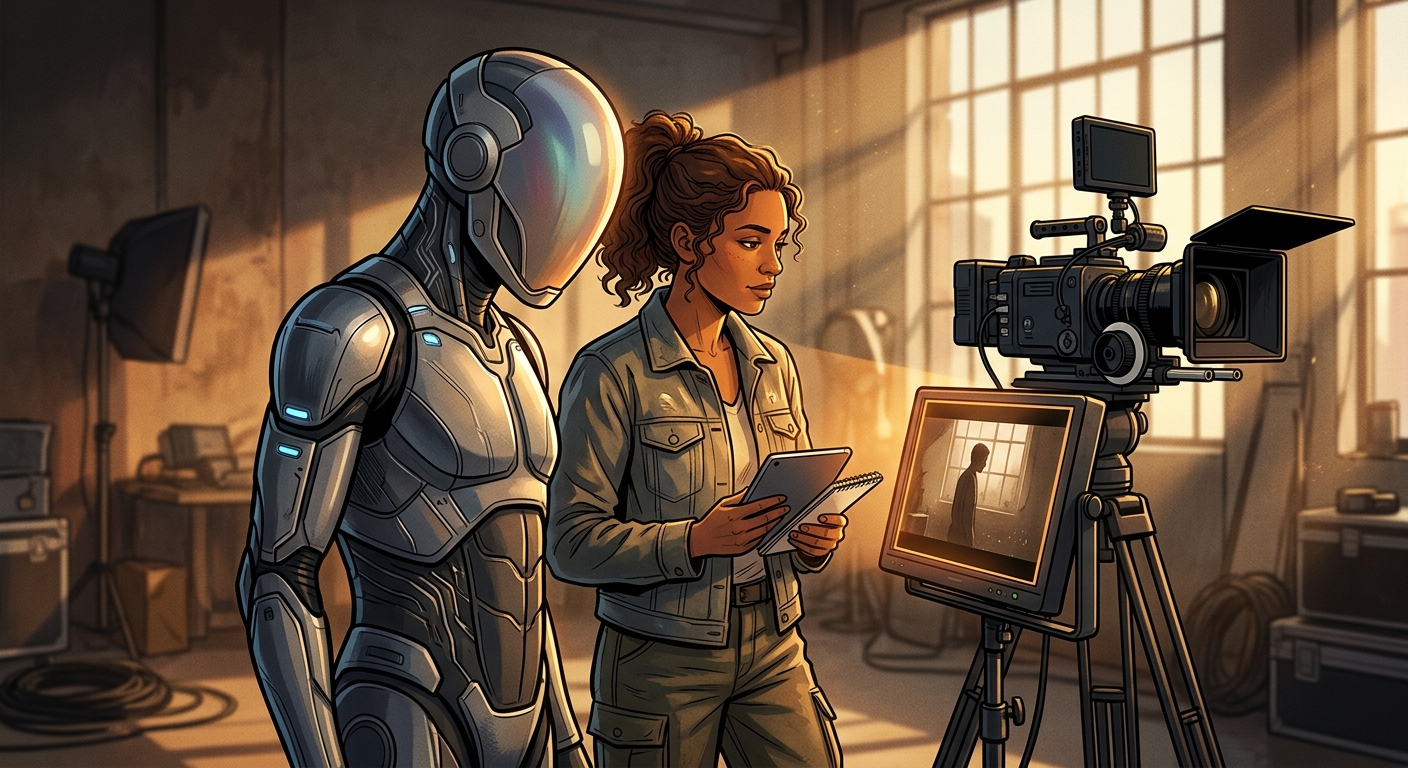
The Camera section is named for the device that mediates between the synactor’s performance and the audience who receives it. In film and television, this mediation is literal: a physical camera records what the performer does, and editorial choices determine what the audience sees. In games, the equivalent is the game’s virtual camera — the viewpoint through which the player experiences the world and its inhabitants. In both cases, the camera is not a passive recorder but an active participant in the performance, shaping what is visible, what is emphasised, and how the audience relates to the character they are watching.
This section examines the full context in which synthetic performance is staged and received: the production conditions that determine how a performance is captured and presented, and the visual, sonic and environmental elements that frame and support it. Understanding these conditions is essential for both the synactor who wishes to perform well within them and the critic who wishes to evaluate a performance fairly.
The section is organised to move from the earliest stages of production — rehearsal, performance capture, scripting — through the technical and creative elements of presentation: the virtual camera, camera placement within performances, environmental staging, costume, hair, makeup, and sound. It concludes with a topic of particular relevance to synthetic performance: the aesthetics of gravity, and what the physical laws of the digital world reveal about the nature of synthetic presence.