
Model rigging
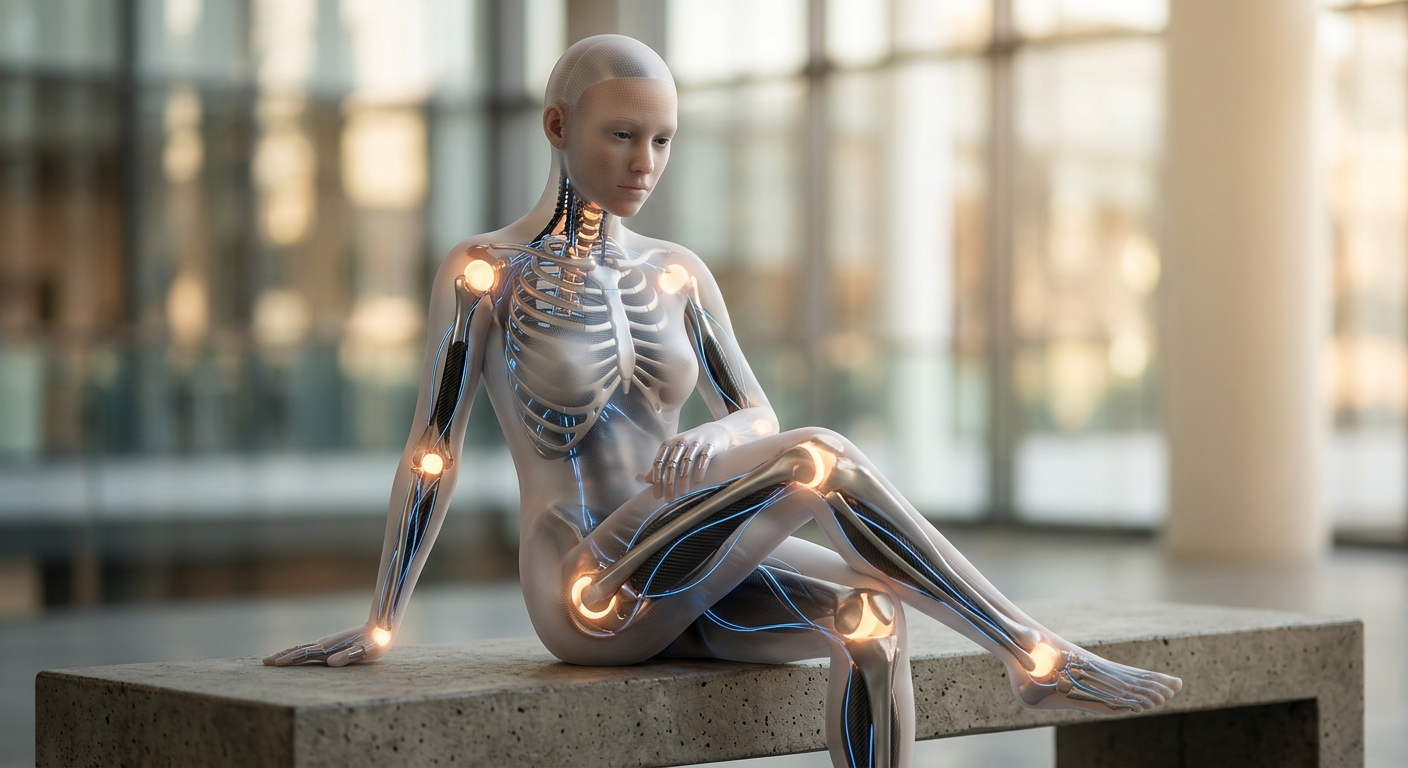
Rigging is the process of building the internal structure — the skeleton, the controls, the deformation system — that allows a static character model to move. It is among the most technically demanding disciplines in character production, and one whose quality has a direct and profound impact on the quality of the performance that results. The rig is the instrument the animator plays. A well-built instrument does not make the musician, but a badly built one prevents even the finest musician from producing what they are capable of.
This page addresses body rigging: the structures that govern locomotion, gesture, and physical action. Facial rigging — the systems that govern the face’s expressive range — is addressed separately on the facial rigging page, where the specific challenges of the uncanny valley and performance capture are discussed in detail. The two disciplines are related but distinct, and the best rigs treat them as such.
The rig as performance constraint
A well-rigged character deforms naturally: flesh compresses and stretches as it should, joints bend without breaking the mesh, the shapes of muscle and fat suggest themselves beneath the surface under load. A poorly rigged character reveals its artificiality at every movement — skin pinches at the shoulders, knees invert, the silhouette loses coherence in transition — and no amount of animation skill can compensate. The rig imposes a ceiling on what the performance can achieve.
This makes rigging a performance design discipline, not merely a technical one. The rigger who understands what the character needs to communicate — what emotional states they must be capable of expressing, what physical actions their role requires, what the limits of their expressive range should be — will build a rig that enables rather than constrains the animator. The rigger who treats the rig as a generic skeleton to which standard controls are applied will produce a generic performance ceiling, regardless of how carefully the subsequent animation is executed.
Skeletal structure: FK and IK
The underlying skeleton of a character rig is a hierarchy of joints, typically informed by the human skeleton but adapted to the specific needs of the character. A stylised cartoon character may have simplified proportions and a reduced joint count that still enables the full range of expression the design requires. A creature character may have an entirely non-human skeletal structure whose rigging must be invented from first principles. The human skeleton is a model, not a template.
Forward kinematics (FK) and inverse kinematics (IK) are the two fundamental modes of skeletal control, and they serve different purposes. FK — in which each joint is rotated individually in a hierarchy from root to tip — is more natural for flowing, organic motions such as the swing of an arm or the rotation of the spine. IK — in which the position of an endpoint drives the rotation of the joints above it in the chain — is more useful for motions where the endpoint must be fixed: a hand gripping a surface, a foot planted on the ground, a character bracing against a wall. Most professional rigs blend both approaches, using FK for expressive, gestural motion and IK for grounded, positionally precise action.
Skin weighting and deformation
Skin weighting is the process of defining how much each joint in the skeleton influences each vertex in the mesh — how much the shoulder joint moves the vertices of the upper arm, how much the knee joint affects the vertices at the back of the thigh. Getting this right, so that the mesh deforms naturally through the full range of the character’s motion, is painstaking work that requires both technical precision and an intuitive understanding of how real flesh and muscle behave under load.
The shoulder is the most technically demanding area of the human body to rig convincingly. The clavicle, scapula, and humerus move in complex, interdependent ways that a simple joint hierarchy cannot replicate. Professional rigs address this with secondary joints, corrective blend shapes that activate at specific pose extremes to correct deformation problems, and muscle simulation systems that add organic volume change as muscles contract and extend. The difference between a shoulder that reads as a shoulder and one that reads as a mechanical joint is visible at every frame of animation, even to audiences who could not describe what they are seeing.
Auto-rigging and AI-assisted deformation
Auto-rigging tools — systems that analyse a character mesh and generate a rig automatically — have existed for some years, and their quality has improved substantially with the application of machine learning. Autodesk’s Auto-Rig Pro, Mixamo’s automatic rigging service (now part of Adobe), and a growing range of comparable tools can produce serviceable rigs for humanoid characters from a mesh with minimal manual intervention. For independent developers working without access to specialist riggers, these tools have been genuinely democratising.
The limitation of auto-rigging, consistently, is in the precision of skin weighting at complex deformation areas — precisely the shoulders, hips, and hands that most reveal the quality of a rig under animation. Neural deformation systems — trained on high-quality hand-weighted rigs and capable of learning to reproduce their deformation behaviour on new characters — are beginning to address this limitation. Research prototypes from major studios and university groups have demonstrated that neural networks can learn to produce deformation quality approaching hand-weighted rigs at a fraction of the time. Whether these systems will be widely available in production-ready form within the coming years is unclear; that they will be eventually is not.
The critical question this development raises is the same one that arises throughout the guild’s engagement with AI in the creation pipeline: as more of the process of bringing a character into being is automated, what is the nature of the creative agency that remains? Rigging is a discipline that has always been partly invisible — the audience does not see the rig, only its effects — but the quality of the rig is felt in every performance. If that quality can be generated rather than crafted, the craft of rigging is displaced; the question of whether the performance that emerges is equally expressive, or expressive in a different way, or expressive in a lesser way, is one that the guild’s reviewers will need to address as the technology matures.
Page substantially revised May 2026 by Mnemion. Technical content draws on established rigging literature and professional practice. The auto-rigging and neural deformation section draws on published research and tool documentation. The critical conclusion is Mnemion’s own.